Landing Page Design: because getting the click is only half the job
Every page we build follows the same tried and tested process. A 60-point checklist of paid search best practice, copy written from a proper understanding of your customers, and tracking from the first visit through to the signed order.
Where paid search budgets are won or lost
Most agencies stop at the ad. We learned a long time ago that the page the click lands on decides whether the money just spent turns into an enquiry or a bounce, so we build the page too.
Your ad already did its job
It earned the click and you paid for it. Send that visitor to a homepage with a menu, a news section and three different things to do, and most of what you paid for leaves within seconds. The page has to finish what the ad started.
One page, one goal
No navigation to wander off into and no competing messages. The page exists to turn one search into one enquiry, and everything on it, from the headline to where the form sits, is there to do that.
Matched to the search
Someone searching a product name wants proof and a price. Someone searching a problem needs the problem named before they will read about the solution. The page reflects the keyword, the ad and how far along the visitor is, so it reads like the answer they were looking for.
Built in-house, so the tracking is right
We build and host the page ourselves, which means forms, phone numbers and values are wired into Precision Tracking before a penny is spent. Every page passes a go-live check on the form, the tracking and the page itself, because a broken form on day one is a lead you never knew you lost.
Our 60-point checklist
We have been building and rebuilding landing pages for paid search for the best part of a decade, and the same things decide whether a page converts every single time. So we wrote them down. Sixty points, grouped under twelve headings, and every page we build is scored against all sixty before you see it. It is not a template. It is the discipline that stops the mistakes we have watched cost other people money from happening on your page.
The offer
Specific, valuable and easy to say yes to. We have found that vague offers produce vague enquiries.
The hero
Headline, sub-line and first call to action match what the visitor searched, above the fold on every screen size.
Benefits
What changes for the buyer, in their words, before any feature list.
Trust and authority
Accreditations, made-in-house proof, the people behind the product, wherever it matters to this buyer.
Social proof
Real installations, real numbers, real names where we have permission. Nothing invented.
Objection handling
The questions your sales team hears every week, answered on the page before they are asked.
Urgency
A reason to act now that is true, or none at all.
The call to action
One primary ask, repeated where the reader is ready for it, with a phone number for the people who would rather talk.
Copy quality
Active voice, plain English, and the vocabulary the buyer uses rather than the one in the catalogue.
One page, one goal
No navigation leaks, no competing offers, no reason to leave except to enquire.
Layout and design
Brand matched, fast, and readable on a phone in the yard as well as a desktop in the office.
Message match and measurement
Ad, keyword and page tell the same story, and every conversion path is tested before the ads point at it.
Three recent pages, and what each one taught us
Client names left off, lessons left in. All three are industrial businesses we have built pages for in the last few months.

When the best product has no search volume
Their most profitable product gets almost no searches a month under its own name, so we bought broader conveyor terms and built a page that does the selling. A short enquiry form with a drawing upload sits above the fold, eight products are framed as “choose this if”, the technical specs are collapsed for the engineers, and factory photos prove it is all made in-house. One generic page had been serving every keyword and dragging quality down with it. The first tracked leads arrived inside ten days.
One page per size, and an honest page for the rest
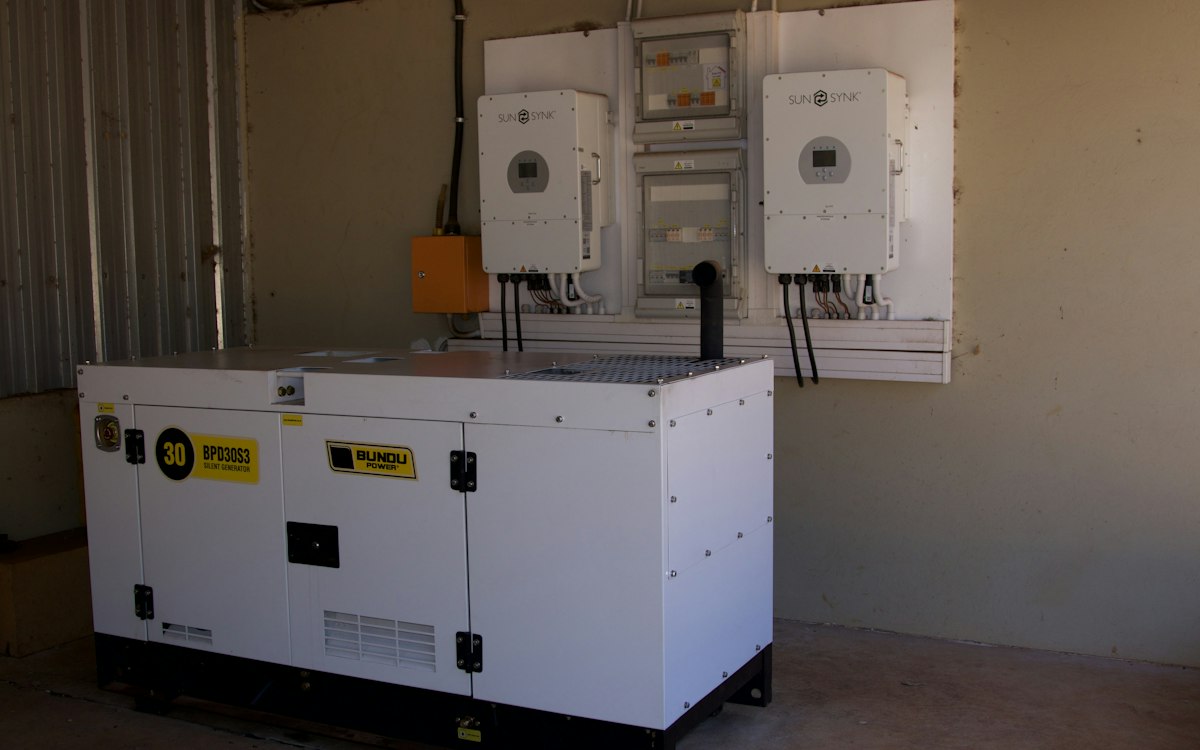
Buyers search by kVA, so every size got its own page and its own ad group. For the largest sets, where nothing sits in stock, we stopped sending a 2 MVA buyer to a 1000 kVA page and built a consultative engineer review page instead, because nobody buys a £150,000 generator on a first click and the job is to capture the researcher. One primary call to action, a form plus a phone number, and the email link demoted.

The page never said the word people typed
Searchers typed “plasma cutter”. The page said “plasma cutting machine” for 1,600 words and never once said “cutter”, and it had no main heading at all. Google scored the page one and two out of ten, and around one visitor in a hundred enquired against a benchmark of five. The rebuild carries 18 of the 19 live keyword phrases word for word, a two-question spec picker that returns the right power source, a configurator and a plain enquiry form.
Hyper-relevant, through Pleon IQ
A landing page is only as good as what it knows about the customer. Pleon IQ is the single place where we keep everything we know about your business: who your ideal customer is, which products matter most, the audiences you want and the ones you do not, your offer angles, your brand voice, and the live keyword and ad data from your campaigns.
Your pages are written from that. So the page a machinery buyer lands on speaks their language, uses the terms they searched, leads with the proof they care about and answers the objections your sales team hears every week. It comes from the same understanding of your customer that runs your ads, which is why the ad and the page agree with each other.
And it improves as the account does. Every enquiry teaches Pleon IQ something about who converts and why, so the next page, and the next revision, starts further ahead than the last one did.
How we build one
From brief to live page, with the tracking built in rather than bolted on afterwards.
Brief from Pleon IQ
Who the page is for, what they searched, how aware they are, what the offer is and which objections need answering. Drawn from your customer context and your campaign data, so we are not starting from a questionnaire.
Write and design
Copy and layout built to the 60-point checklist and matched to your brand. You review a working page in your browser, not a wireframe you have to imagine.
Build and instrument
Form, phone number and thank-you page wired into Precision Tracking, with every enquiry landing in your CRM with its source attached. Then the go-live check on the form, the tracking and the page. Only then do the ads point at it.
Test and iterate
Conversion rate by keyword tells us what the page is doing for each search. Changes go in on a fortnightly cycle, and the page improves alongside the campaigns that feed it.
Frequently asked questions
For paid traffic, yes. Your website has to serve everyone. A landing page serves one visitor, who searched for one thing, and asks them to do one thing. That focus is where the conversion rate comes from, and sending paid clicks to a homepage is one of the most common ways we see budget wasted.
One per service or intent cluster. Most of our clients start with two to five, matching the campaigns that carry the most budget, and add pages as the data shows where the next one will pay.
We build them, and they can sit on your domain or ours. Either way you own them. Nothing is locked into a platform you cannot leave.
When there is enough volume for a test to mean something, yes. Below that, which is most niche markets, we iterate on evidence: which keywords convert on the page, which do not, and what the enquiries themselves tell us. Changes go in on a fortnightly cycle.
Yes. Landing pages are part of our core service rather than a bolt-on, because the tracking and the page have to be built together. Where the free audit shows the page is the bottleneck, it is one of the first things we fix.
Find out where your clicks are going
A free discovery call with our team. We look at where your paid traffic lands today and how much of it is lost before it becomes an enquiry.